
Turku Curling Arena

  • Front Page
  • The Sport
    • Curling Introduction
    • Curling.fi
  • Club
    • Club Introduction
    • Club Activities
    • Become a Member
    • Our Partners
    • Billing Infromation
  • Booking
    • Book a Time
    • For Businesses
    • Price List
  • Contact Information
  • FAQ
  • Suomeksi

Turku Curling Arena

  • Front Page
  • The Sport
    • Curling Introduction
    • Curling.fi
  • Club
    • Club Introduction
    • Club Activities
    • Become a Member
    • Our Partners
    • Billing Infromation
  • Booking
    • Book a Time
    • For Businesses
    • Price List
  • Contact Information
  • FAQ
  • Suomeksi
Curling background
The Sport


The sport's history


Curling originated in 16th-century Scotland, when the summer sport of bowls was adapted into a winter version. The name curling refers to the stone’s curved motion on the ice.

The sport spread from Scotland to the rest of the world, and Canada became its superpower – with over a million players. In Europe, Scotland, Switzerland, and Sweden have been internationally successful, but in recent years Asian countries such as China, Japan, and South Korea have emerged as challengers, especially in women’s competitions.

In Finland, curling is a small sport. Finland won Olympic silver in 2006 and European Championship gold in 2000, but in recent years its success has declined due to a shortage of players.
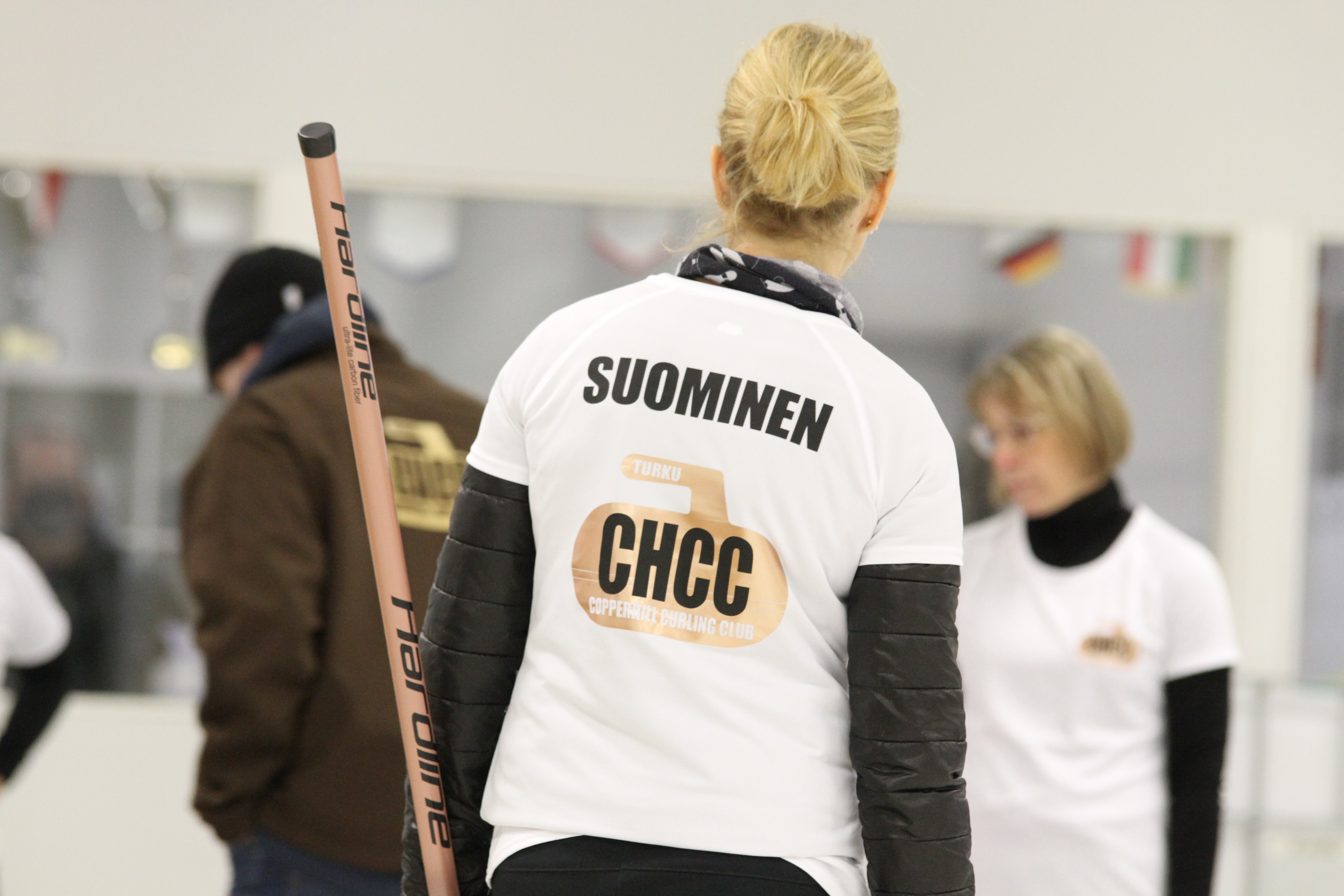
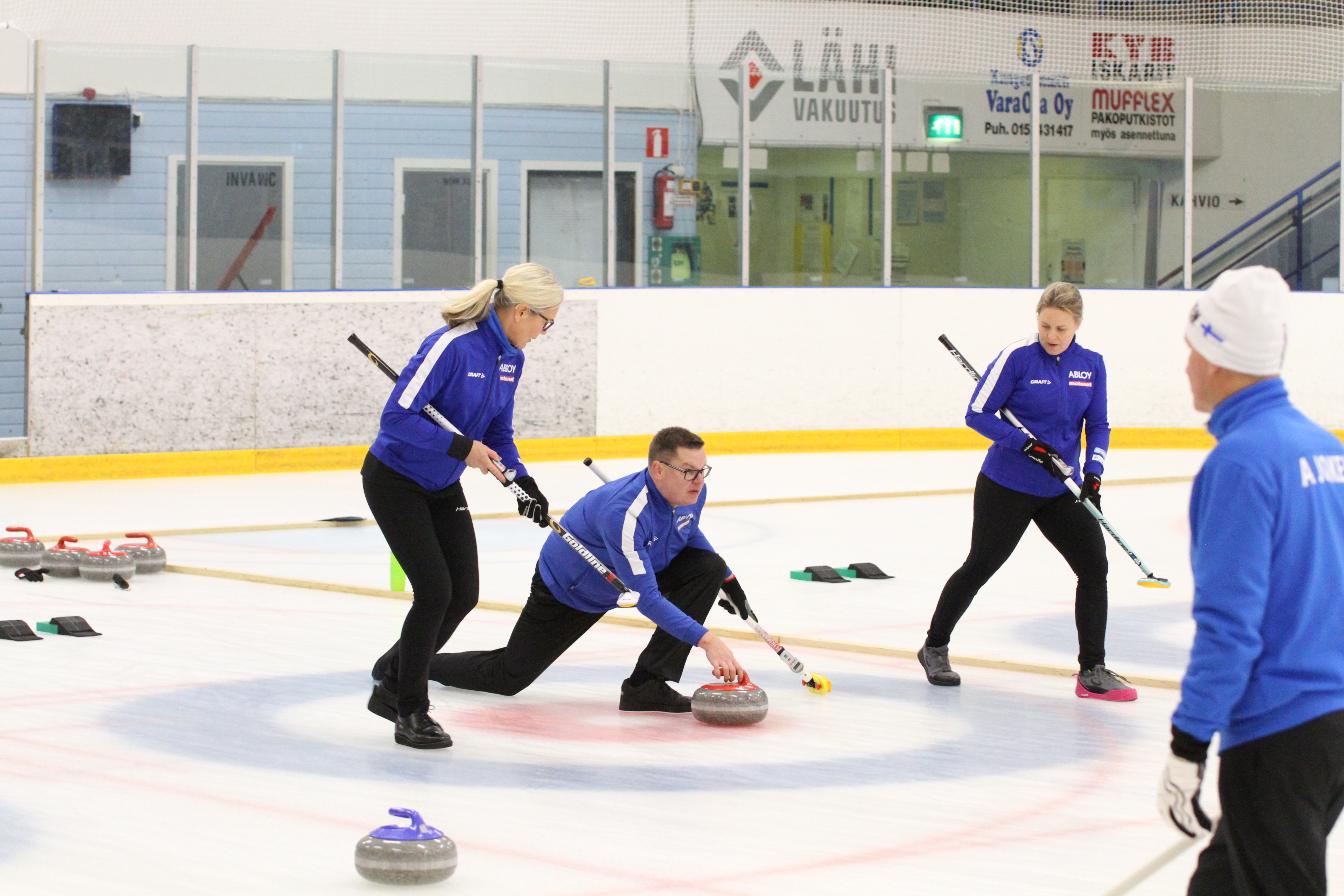


Curling game

The idea of the game


Curling is a team sport played on ice. A typical curling game lasts about two hours and usually consists of 6–8 ends (rounds). During each end, both teams take turns throwing eight stones each, trying to place their own stones closer to the center of the house (the target circle) than their opponents’.

There are different types of throws in curling: a draw shot (the stone stops inside the house), a guard (the stone stops in front of one’s own stone to protect it), and a takeout (the stone removes an opponent’s stone).

Curling is a highly tactical sport – it is often called “chess on ice.”


The team


A curling team consists of four players. Each player throws two stones per end. The team’s captain, or skip, stands in the house and shows the “target” to the player who is throwing, while the other two players act as sweepers.

The first and second players are responsible for setting up the play. They throw guards and draws when the team is attacking, or takeouts when defending. Both are usually excellent sweepers. The third player (or vice-skip) is expected to make tactical decisions and perform more varied shots.

The fourth player throws the team’s final, decisive stones. This player must possess strong tactical and strategic understanding as well as the ability to make good decisions under pressure.

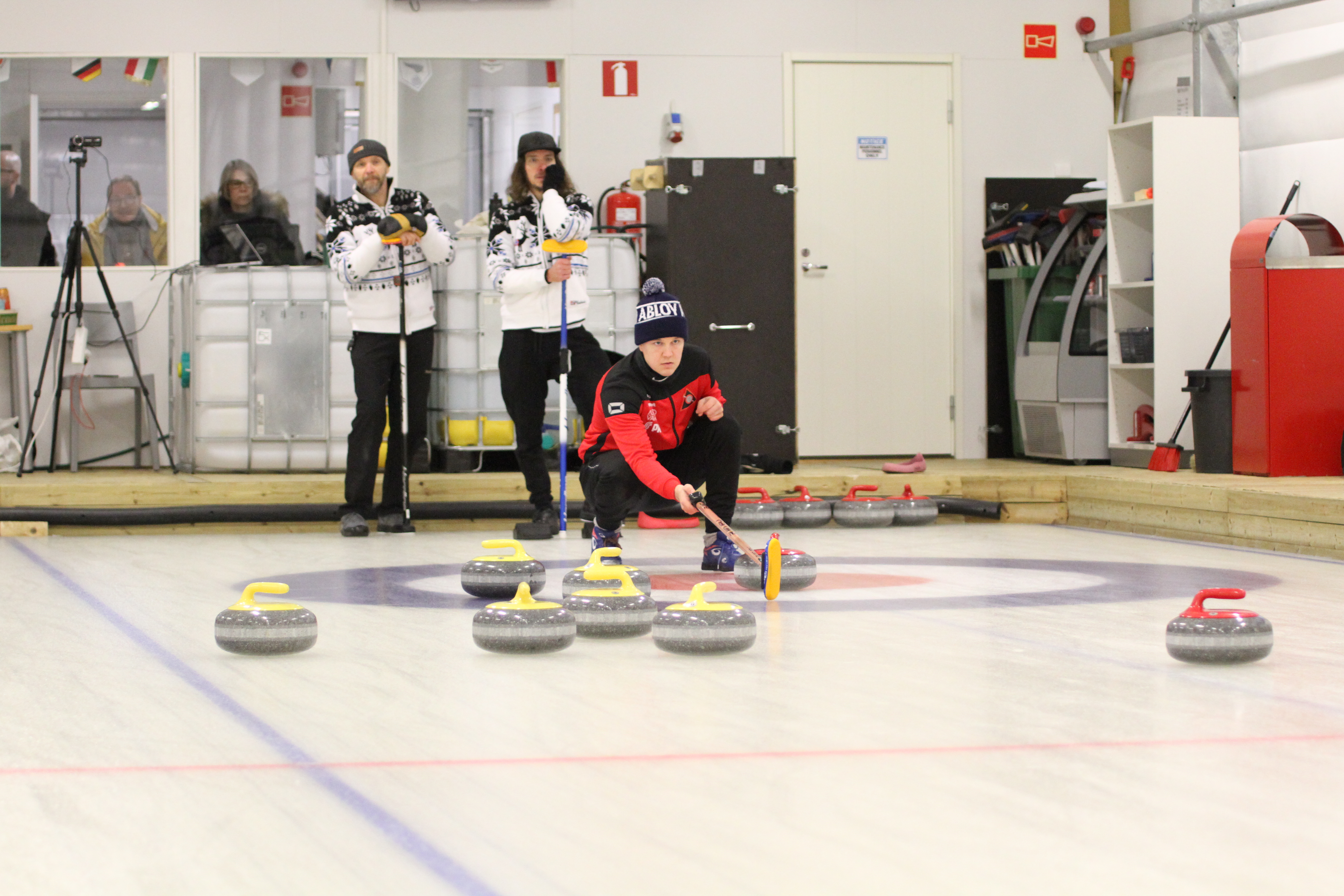


Curling game

Scoring


Curling’s scoring system is similar to that of pétanque. In each end, only one team scores points (unless the end is blank). The team whose stone is closest to the center of the house scores points.

A team receives as many points as the number of its own stones that are closer to the center than the opponent’s nearest stone. Only stones that are within the house count for scoring.

The team with the most points at the end of the game is the winner.

Glossary

Opening Shot
A shot intended to remove a guard.
Front-house Weight
The speed required for a stone to reach the front of the house at the far end of the sheet.
Hack
A foothold at both ends of the sheet from which players push off when delivering a stone.
Hammer (Last Stone)
The term used for the final stone thrown in an end.
Sweeping
The action of brushing the ice in front of a moving stone to clean the surface or affect its speed and curl.
Hog Line
A line across the sheet, parallel to the tee line, 6.40 meters (21 feet) away. A stone must completely cross it to stay in play.
Curl
The rotation that causes the stone to curve (clockwise or counterclockwise) as it travels down the ice.
Draw Around
A shot that curls behind another stone for protection.
In-turn
A rotation that makes the stone curl clockwise for right-handed players (counterclockwise for left-handed players).
Draw Shot
A shot that comes to rest in or just in front of the house.
Draw Weight
The speed required for a stone to reach the house at the far end of the sheet.
Freeze
A draw shot that stops directly against another stone.
Blank End
An end in which neither team scores any points.
Swingy Ice
Ice conditions or stones that cause the rock to curl more than usual.
Button
The small circle at the very center of the house.
Pebble
Small droplets of water sprayed on the ice before play; they freeze and reduce friction between stones and the ice.
House
The target area at each end of the sheet, consisting of concentric circles.
Counting Stone
A stone lying in or touching the house that counts toward scoring.
Takeout
A shot that removes an opponent’s stone from play.
End
A segment of the game in which both teams throw eight stones alternately until the score is determined.
Runback
A shot where a moving stone hits a stationary one, which then removes another stone from play.
Hit and Roll
A takeout shot where the shooter rolls to another position after impact.
Out-turn
A rotation that makes the stone curl counterclockwise for right-handed players (clockwise for left-handed players).
Guard
A stone placed to protect another stone from being hit.
Guard Zone
The area between the hog line and the tee line, excluding the house.
Back-house Weight
The force needed for a stone to reach the back part of the house.
Tee / Tee Point
The center point of the house.
Double Takeout
A shot that removes two of the opponent’s


instagram vector logo icon social media logotype 901408 392 removebg preview turkucurling

f logo RGB Blue 72turkucurling

blogger logo icon png 10turkucurling


TCA logo footer


Kurrapolku 2, 20320 TURKU

Contact us

Customer register

Update cookie policy

Website: Sivustamo Oy


© 2026 Turku Curling Arena